
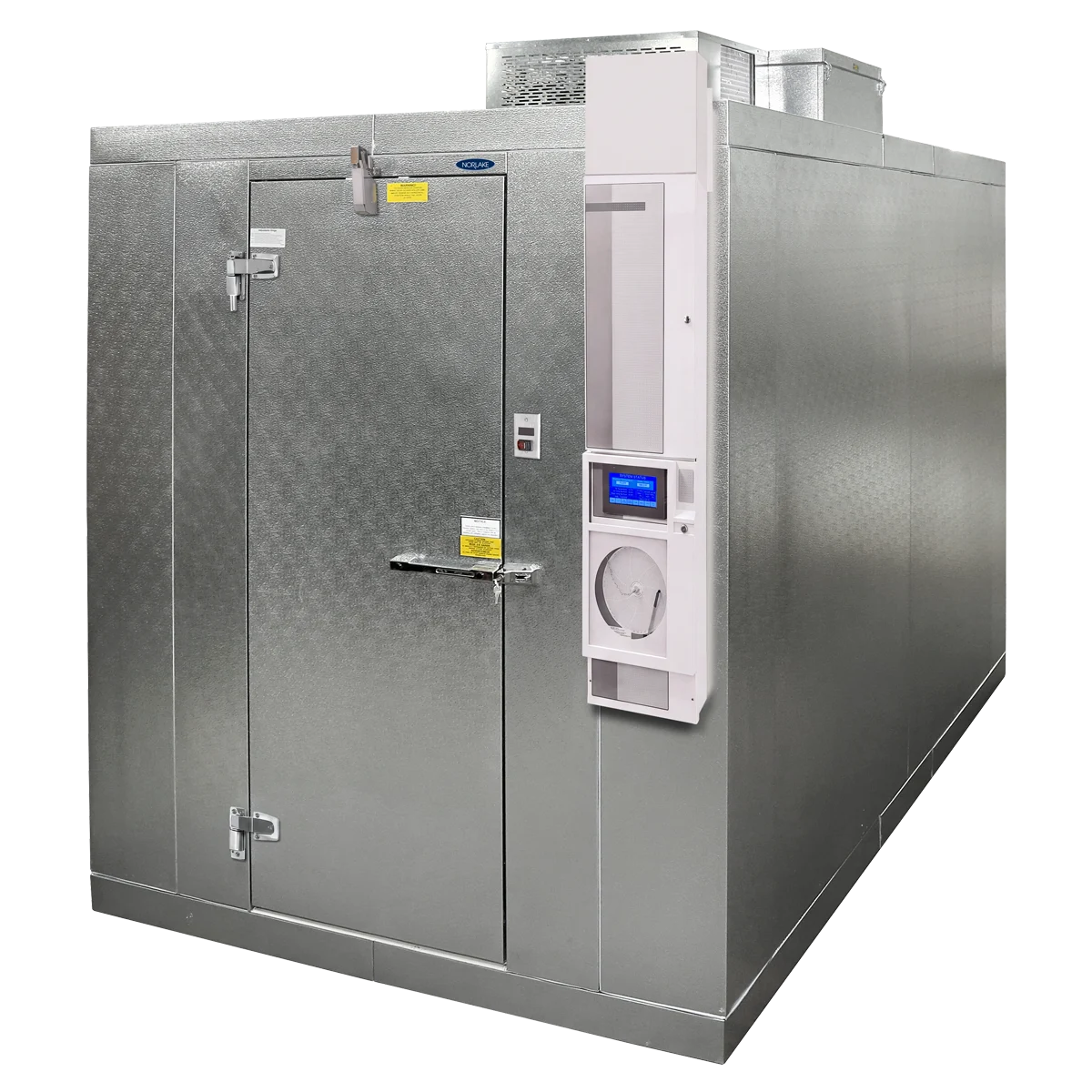
Choose the room path around the work
A laboratory cold room is a walk-in controlled-temperature space planned around stored material, usable volume, access, workflow, facility fit, oversight, and continuity. Use this scorecard to identify the inputs that determine whether a standardized Mini Room or a custom environmental room is the better starting point.
The scorecard organizes a project. It does not select a product automatically or establish final performance, qualification, validation, or acceptance.
Laboratory cold-room selection scorecard
| Decision area | Questions to answer | Missing input to collect | Norlake Scientific path |
|---|---|---|---|
| Material | What is stored, and why does the condition matter? | Material list, packaging, sensitivity, and approved procedure | Application and engineering review |
| Condition | What temperature and allowed variation apply? | Approved storage requirement or operating procedure | Mini Room or custom review |
| Inventory | What is current, peak, and forecast volume? | Container dimensions, fill plan, and growth | Usable-volume and layout review |
| Workflow | Who enters, how often, and with what equipment? | Retrieval pattern, carts, staging, and occupancy | Door, shelving, and layout review |
| Interior | What shelves, racks, aisles, clearances, and segregation are needed? | Loaded-room sketch or elevations | Room-format and option review |
| Facility | What power, heat rejection, floor, access, and service conditions apply? | Site and installation information | Installation review |
| Oversight | What controls, alarms, records, and response are required? | Responsibility and data-review plan | Required versus optional scope review |
| Continuity | What happens during an interruption? | Consequence, response, and alternate-capacity plan | Project-specific continuity review |
Complete the material and condition brief
Record the source of the condition before choosing a room:
- Material class and packaging.
- Approved storage condition.
- Sensitivity and consequence of an excursion.
- Segregation or quarantine needs.
- Entering material condition when relevant.
- Whether the room is for storage or includes process work that adds heat or moisture.
There is no single universal laboratory cold-room temperature. The stored material and operating procedure define the project requirement.
Plan usable capacity and workflow
A room plan should show more than an empty footprint. Record:
- Current, peak, and forecast inventory.
- Shelf and rack dimensions.
- Aisles and cart paths.
- Door swing, staging, and receiving.
- Staff occupancy and retrieval frequency.
- Clearances for supply and return air.
- Service access and future growth.
Clear airflow paths are a layout consideration. They do not establish mapped room uniformity. Any uniformity claim requires configuration-specific evidence under defined conditions.
Choose a standardized or custom path
Start with Mini Rooms when the published platform fits
Norlake Scientific Mini Rooms are standardized cooler and freezer room platforms with published +4°C and -20°C options. Confirm the required footprint, inventory, access, shelving, floor, utilities, and installation conditions for the selected model.
Review environmental rooms when the project is custom
Norlake Scientific environmental rooms are the better starting point when geometry, operating profile, humidity, lighting, installation, facility coordination, or control scope requires project-specific review.
Published product capabilities and options remain configuration-dependent. Final operating conditions are confirmed during engineering review.
Plan oversight and continuity
Separate required functions from optional equipment. Record:
- Required control functions.
- Alarm responsibility and recipients.
- Optional monitoring or remote access.
- Optional chart recording.
- Data review and retention responsibilities.
- Backup space and response procedure.
- Service access and open items.
Monitoring, chart recording, remote access, detachable tablets, alarm packages, and redundancy are optional or configurable by project scope. A cold room should not be described as inherently monitored.
Use the scorecard to choose the next step
- Published cooler or freezer platform fits the condition, volume, footprint, and facility: review Norlake Scientific Mini Rooms.
- Geometry, condition range, humidity, lighting, or controls need custom review: review Norlake Scientific environmental rooms.
- Cooler versus freezer consequences remain unresolved: use the laboratory cold room versus freezer room comparison.
- Material, condition, volume, and facility inputs are ready: use the request-a-quote path.
Frequently asked questions
What temperature is a laboratory cold room?
There is no single universal temperature. The stored material and operating procedure define the setpoint. Norlake Scientific Mini Room includes published +4°C cooler and -20°C freezer platforms, with final configuration confirmed for the project.
When should a laboratory use a custom room?
Review a custom approach when geometry, condition range, humidity, lighting, installation, controls, monitoring, or workflow extends beyond a standardized platform.
Continue planning
- Laboratory Cold Room Design Checklist. Prepare a laboratory-specific room brief for engineering or quote review.
- Laboratory Cold Room vs Freezer Room. Compare the system and continuity consequences of cooler and freezer operation.
- Norlake Scientific Mini Rooms. Review standardized cooler and freezer room platforms.
- Norlake Scientific environmental rooms. Review custom room-scale requirements.